How Peptides Signal Cells
A short audio overview of how peptides signal cells.
Key Peptide Research Categories
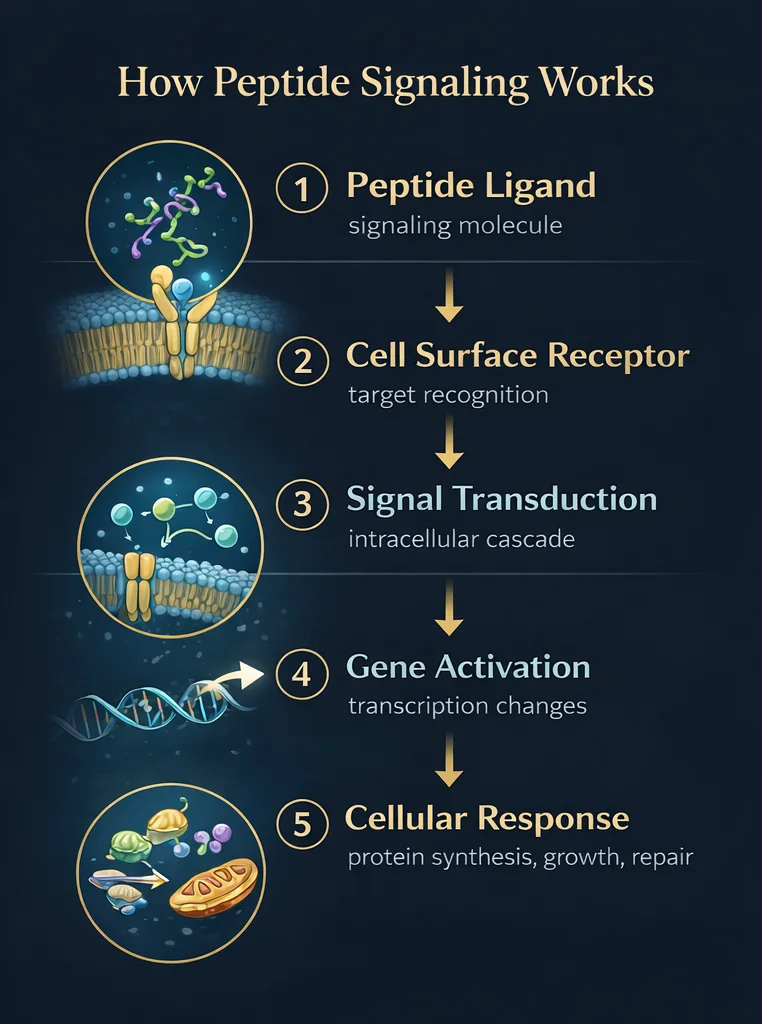
Peptide Signaling Flow
- Step 1: Peptide LigandSignaling Molecule
- Step 2: Receptor BindingTarget Recognition
- Step 3: Signal TransductionIntracellular Cascade
- Step 4: Cellular ResponseDownstream Effect
About This Reference Guide
This reference guide summarizes published preclinical and clinical literature involving commonly studied research peptide compounds and the signaling pathways under active investigation. Information is presented for scientific reference, literature-indexing, and educational review only and does not describe intended human or veterinary use.
Each compound section catalogs published research findings, signaling-pathway literature, and observed measurements documented in experimental models. References to receptor activity, pathway engagement, and downstream signaling describe what published studies have reported under controlled experimental settings — not therapeutic or biological claims about any compound.
For laboratory research use only. Not for human consumption.
What Peptides Are
Peptides are short chains of amino acids — typically between two and fifty — linked together by peptide bonds. Chains longer than about fifty amino acids are generally classified as proteins. The distinction matters in the published literature because peptides' smaller size has been documented to give them different signaling behavior: research has examined them as signaling molecules rather than structural components.
A peptide's signaling profile is determined by its amino acid sequence. Published structure-activity research has documented that the order of amino acids dictates how a molecule folds in three dimensions, which in turn shapes which receptors it has been observed to bind and which pathways have been studied in association with it. Each of the twenty standard amino acids contributes different chemical properties — hydrophobic, charged, polar — that have been characterized in receptor-affinity literature.
The human body produces many endogenous peptides documented as carrying signals between cells: neuropeptides in the brain, peptide hormones in the endocrine system, antimicrobial peptides in the immune system, and mitochondrial-derived signaling molecules inside cells. The range of biological processes these molecules have been documented as participating in is what has made synthetic versions valuable as research tools and reference compounds.
Synthetic research peptides are manufactured through solid-phase peptide synthesis (SPPS) and supplied in lyophilized form at purities exceeding 98%, verified by HPLC and mass spectrometry. This chemical consistency supports controlled, reproducible experimental conditions. For deeper coverage of how published literature has categorized peptide-receptor interactions, see Peptide Mechanisms Explained.
Receptor Binding
Signal Cascade
Cellular Response
Simplified overview of peptide signaling from receptor binding to cellular response.
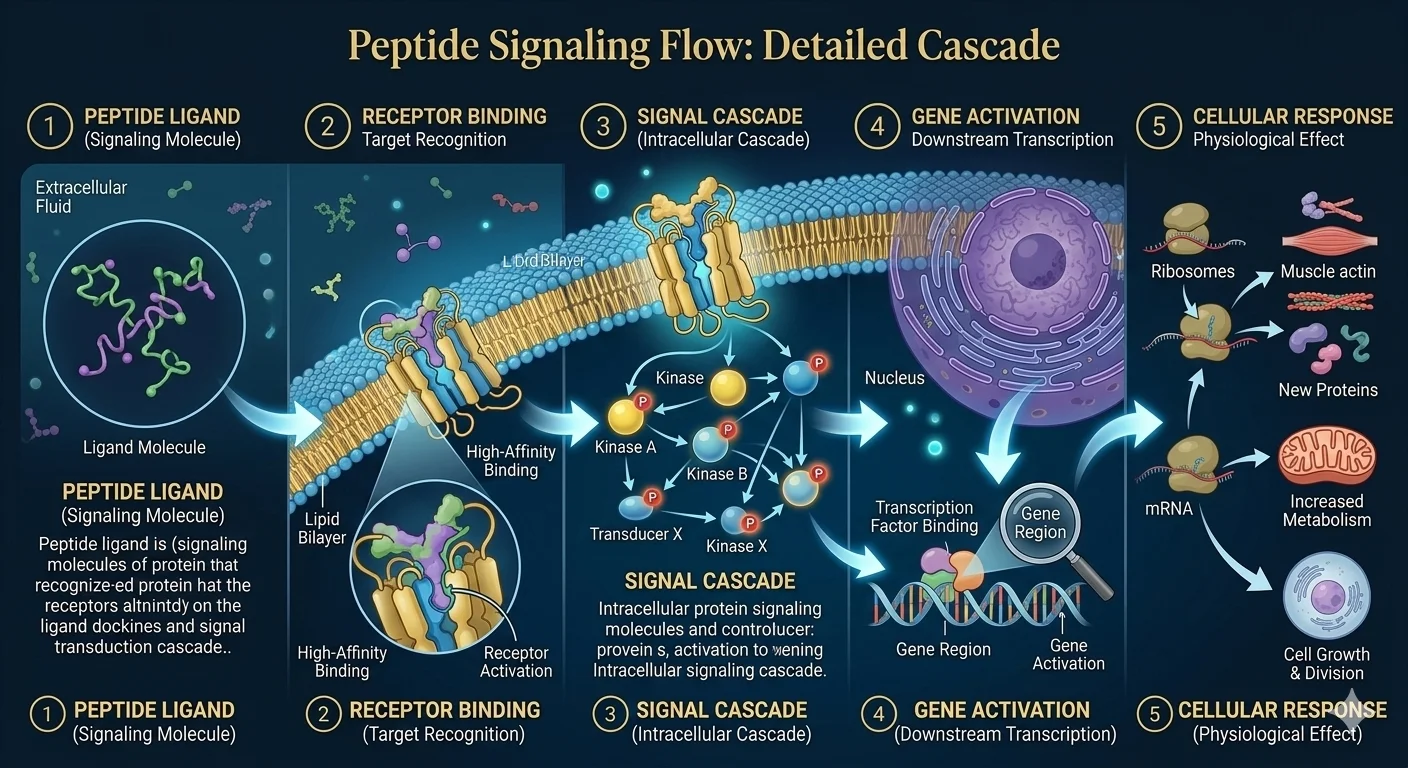
Detailed view of intracellular signaling cascades activated after peptide receptor binding.
Examples of Signaling Peptides
BPC-157
Studied for tissue repair signaling — VEGF, nitric oxide, and growth factor coordination.
Semax
Studied for BDNF modulation and neurotrophic factor pathways supporting neuronal growth.
Selank
Studied for GABA-A receptor modulation and the intersection of immune and neural signaling.
MOTS-C
A mitochondrial-derived peptide studied for AMPK activation and cellular energy sensing.
Peptide Signaling Pathways in the Literature
Published research has documented peptide signaling as receptor-mediated. When a peptide engages its target receptor, conformational changes in the receptor have been observed in association with downstream intracellular signaling — a process the literature describes as signal transduction.
The specificity of these interactions has been characterized in receptor-affinity literature as a function of three-dimensional structure and electrostatic complementarity with the receptor binding pocket. Published structure-activity research has documented that single amino acid substitutions in a peptide sequence can shift documented receptor-binding profiles substantially — a principle used in the design of synthetic analogs with different signaling characteristics.
Major receptor families documented in the peptide literature include G protein-coupled receptors (GPCRs), the largest receptor family in humans, and receptor tyrosine kinases. Most research peptides examined in the literature engage one or both of these families.
Once a peptide engages its receptor, downstream signaling has been documented across pathways including MAPK/ERK, PI3K/Akt, and cAMP-dependent cascades. Published literature has examined how compounds such as BPC-157, Semax, and MOTS-C engage these cascades. The Peptide Mechanisms Explained reference covers these pathways in detail.
Related Research
Peptides Studied in Tissue Repair Research
Recovery peptides are among the most actively studied research compounds. Two in particular — BPC-157 and GHK-Cu — have built deep preclinical research profiles around tissue signaling, blood vessel formation, and extracellular matrix remodeling.
BPC-157: Tissue Signaling and Angiogenesis
Compound Profile: BPC-157 is a synthetic 15-amino-acid peptide derived from a protective protein found in human gastric juice. It is one of the most frequently cited compounds in tissue repair research.
Literature Findings: In preclinical studies, research documented changes in VEGF expression measurements, with VEGF being the growth factor associated with new blood vessel formation (angiogenesis) research. Studies also documented engagement with the nitric oxide system and changes in PDGF and FGF signaling markers, two growth factor systems studied in cell migration and tissue remodeling research. Unlike most compounds studied at a single receptor, BPC-157 appeared to engage multiple signaling pathways simultaneously.
Research Focus: Published BPC-157 literature has documented engagement across multiple signaling pathways simultaneously rather than at a single receptor. The compound has been examined in research on coordinated tissue-signaling pathway interactions, blood-vessel-formation markers, and matrix-remodeling research at the molecular level.
Key Signaling Pathways:
- VEGF upregulation and angiogenesis
- Nitric oxide (NO) system modulation
- PDGF and FGF growth factor signaling
- Fibroblast migration and collagen expression
Research Snapshot:
- Researchers documented changes in endothelial tube formation markers in vitro
- Studies reported changes in VEGF expression measurements in multiple tissue models
- Research documented pathway-level changes across multiple repair signaling axes
- One of the most-cited peptides in tissue signaling literature
Explore the Research: BPC-157 Research Profile | BPC-157 Product Page | Research Hub
GHK-Cu: Collagen Signaling and Matrix Biology
Compound Profile: GHK-Cu is a naturally occurring tripeptide (glycyl-L-histidyl-L-lysine) that binds copper(II) ions. First isolated from human plasma in 1973, its levels naturally decline with age — a finding that launched decades of matrix biology research.
Literature Findings: Published gene-expression literature has documented changes across genes associated with collagen synthesis (types I and III), glycosaminoglycan markers, and the matrix-building / matrix-degrading enzyme balance. Copper has been documented in the literature as a cofactor for enzymes such as lysyl oxidase studied in collagen-cross-linking research. Gene profiling studies have documented expression changes across more than 4,000 human genes in association with GHK exposure.
Research Focus: GHK-Cu has been documented in published literature at the intersection of tissue-signaling research, gene-expression studies, and trace-metal biology. The compound has been characterized in extracellular matrix research across multiple measurement levels.
Key Signaling Pathways:
- Collagen synthesis (types I and III)
- MMP/TIMP balance and matrix remodeling
- Lysyl oxidase activation via copper cofactor
- Decorin expression and TGF-beta signaling
Research Snapshot:
- Modulated over 4,000 genes in profiling studies
- Research documented changes in collagen cross-linking markers through copper-dependent enzyme research
- Shifted the balance between matrix building and degradation
- Levels decline with age, driving research into age-related matrix changes
Explore the Research: GHK-Cu Research Profile | GHK-Cu Product Page | Recovery Kit
Neuropeptide Research
Neuropeptides are signaling molecules that influence neurotransmitter release, synaptic plasticity, and the expression of growth factors that support neuronal health. Two synthetic neuropeptides — Semax and Selank — have built extensive preclinical research profiles.
Semax: Neurotrophic Factor Research
Compound Profile: Semax is a synthetic 7-amino-acid peptide based on a fragment of adrenocorticotropic hormone (ACTH 4-10), with an added Pro-Gly-Pro tail that makes it resistant to enzymatic breakdown.
Literature Findings: In animal model studies, research documented changes in BDNF (brain-derived neurotrophic factor) measurements in the hippocampus and cortex — two brain regions studied in learning and memory research. Studies also documented engagement with nerve growth factor (NGF), glial cell line-derived neurotrophic factor (GDNF), and the dopaminergic and serotonergic systems. For deeper mechanistic context, see our guide on neuropeptide signaling.
Research Focus: Published Semax literature has examined how a single, well-characterized synthetic peptide engages neurotrophic factor signaling pathways studied in the published literature on neuronal survival, growth, and synaptic adaptation research.
Key Signaling Pathways:
- BDNF expression via TrkB receptor activation
- NGF and GDNF modulation
- Dopamine and serotonin system interactions
- MAPK/ERK and PI3K/Akt downstream cascades
Research Snapshot:
- Studies reported changes in BDNF mRNA and protein measurements in hippocampus and cortex
- Interacted with multiple neurotrophic factor pathways
- Enzymatically stable due to Pro-Gly-Pro tail design
- One of the most studied neuropeptides in preclinical literature
Explore the Research: Semax Research Profile | Semax Product Page
Selank: GABAergic and Enkephalin Research
Compound Profile: Selank is a synthetic analog of tuftsin — a naturally occurring immune-modulating peptide — extended with a Gly-Pro sequence for enzymatic stability.
Literature Findings: Published Selank literature has documented changes in GABA-A receptor subunit composition measurements in specific brain regions in research models. Studies have also documented engagement with enkephalin-pathway research — enkephalins are endogenous peptides examined in pain- and mood-pathway literature. Additional studies have documented changes in serotonin and norepinephrine measurements in research models.
Research Focus: Published Selank literature documents engagement at the intersection of immune signaling, inhibitory neurotransmission, and endogenous opioid pathway research. Few research compounds have been documented across all three systems, making it valuable for cross-pathway literature reference.
Key Signaling Pathways:
- GABA-A receptor subunit modulation
- Enkephalinase activity and endogenous opioid regulation
- Serotonin and norepinephrine balance
- Immune-neural signaling cross-talk
Research Snapshot:
- Shifted GABA-A receptor composition in targeted brain regions
- Modulated enkephalin levels through enzyme regulation
- Studies reported engagement with both inhibitory and monoamine neurotransmitter systems
- Derived from an immune peptide, bridging immunity and neuroscience
Explore the Research: Selank Research Profile | Selank Product Page | Neuro Kit
Mitochondrial Peptides in Cellular Energy Signaling
Metabolic peptide research is one of the fastest-growing areas in the field. It spans two distinct approaches: mitochondrial-derived peptides that reveal how organelles communicate with the rest of the cell, and multi-receptor agonists that target interconnected energy regulation systems.
MOTS-C: Mitochondrial Energy Signaling
Compound Profile: MOTS-C is a 16-amino-acid peptide encoded in the mitochondrial genome — not nuclear DNA. This makes it part of a recently discovered class called mitochondrial-derived peptides (MDPs), which changed how researchers think about mitochondria: not just as energy factories, but as active signaling organelles.
Literature Findings: Research documented MOTS-C engagement with AMPK, the cell's central energy sensor. AMPK activation in these models was associated with changes in glucose uptake, fatty acid oxidation, and mitochondrial biogenesis markers. Studies also documented MOTS-C engagement with the methionine-folate cycle, connecting cellular energy metabolism research to DNA methylation and redox balance. For more on this pathway, see our guide on mitochondrial peptide signaling.
Research Focus: MOTS-C has been documented as part of a class the literature describes as mitochondrial-derived peptides — research where mitochondria-encoded signals have been observed engaging whole-cell pathway research. The literature has characterized this as 'retrograde signaling,' opening published research questions about mitochondria-to-nucleus and mitochondria-to-cytosol signaling pathways.
Key Signaling Pathways:
- AMPK activation (master energy sensor)
- Glucose uptake and fatty acid oxidation
- Mitochondrial biogenesis
- Methionine-folate cycle and one-carbon metabolism
Research Snapshot:
- Encoded in mitochondrial DNA, not nuclear DNA
- Research documented AMPK pathway engagement (the cell's central energy-sensing pathway)
- Connected energy metabolism to DNA methylation and redox balance
- Part of a new class of signaling molecules (MDPs) discovered in recent decades
Explore the Research: MOTS-C Research Profile | MOTS-C Product Page | Metabolic Kit
Triple-Receptor Metabolic Signaling Agonists
Compound Profile: A class of synthetic compounds that activates three metabolic receptors simultaneously: GIP (glucose-dependent insulinotropic polypeptide), GLP-1 (glucagon-like peptide-1), and glucagon. Each receptor has been documented in the literature within distinct metabolic pathway research.
Literature Findings: Research documented GIP and GLP-1 engagement with glucose-dependent insulin secretion through cAMP pathways. Glucagon engagement was documented in association with fat oxidation and hepatic glucose pathway research. Preclinical data documented that simultaneous engagement of all three pathways was associated with integrated metabolic responses distinct from single-receptor agonism.
Research Focus: Published triple-receptor agonist literature has examined whether simultaneous engagement across three interconnected metabolic receptors documents signaling distinct from single-receptor or dual-receptor approaches. Research has documented integrated signaling responses across the engaged pathways.
Key Signaling Pathways:
- GIP receptor: glucose-dependent insulin secretion
- GLP-1 receptor: incretin signaling and cAMP pathways
- Glucagon receptor: hepatic glucose output and fat oxidation
- Cross-talk between all three receptor systems
Research Snapshot:
- Targeted three metabolic receptors simultaneously
- Produced integrated responses beyond single-receptor activation
- Addressed interconnected energy regulation pathways
- One of the fastest-growing areas in metabolic peptide research
Explore the Research: Research Hub | Metabolic Kit
Melanocortin Receptor Peptides
The melanocortin system is a signaling network built around five receptor subtypes (MC1R through MC5R) that regulate diverse biological processes. Two synthetic peptides — MCR-141 and Melanotan II — are widely used in melanocortin research because they activate these receptors in different ways.
MCR-141: Selective MC3R/MC4R Agonist
Compound Profile: MCR-141 is a cyclic 7-amino-acid peptide and a metabolite of Melanotan II. Its defining feature is selectivity — it preferentially activates MC3R and MC4R, two receptor subtypes concentrated in hypothalamic circuits of the central nervous system.
Literature Findings: Research documented MCR-141 engagement with both the classical cAMP pathway (through Gs proteins) and ERK1/2 signaling through beta-arrestin at MC4R. This phenomenon — called biased agonism — has been documented as engaging different downstream signaling depending on which arm is activated. The cyclic structure has been documented as conferring greater metabolic stability and sharper receptor selectivity than linear melanocortin analogs.
Research Focus: Published MCR-141 literature has documented receptor-pathway research focused on selective MC3R/MC4R engagement. Comparative studies with broad-spectrum agonists have been documented for receptor-subtype mapping research across the melanocortin family.
Key Signaling Pathways:
- MC3R and MC4R selective agonism
- cAMP generation through Gs protein coupling
- ERK1/2 activation via beta-arrestin (biased agonism)
- Hypothalamic CNS signaling circuits
Research Snapshot:
- Demonstrated biased agonism at MC4R (dual signaling arms)
- Showed sharper receptor selectivity than linear analogs
- Cyclic structure improved metabolic stability
- Key tool for mapping melanocortin receptor subtype functions
Explore the Research: MCR-141 Research Profile | MCR-141 Product Page
Melanotan II: Broad-Spectrum Melanocortin Research
Compound Profile: Melanotan II is a synthetic cyclic analog of alpha-MSH that activates multiple melanocortin receptors — MC1R, MC3R, MC4R, and MC5R. This broad profile makes it the opposite of MCR-141's selective approach.
Literature Findings: At MC1R (found on melanocytes), research documented Melanotan II engagement with the PKA-CREB-MITF signaling cascade studied in melanogenesis research. At MC4R, the compound has been documented as engaging the same central nervous system pathways studied with MCR-141 but with less receptor selectivity, engaging multiple subtypes simultaneously.
Research Focus: Melanotan II has been documented as a comparative reference compound in melanocortin receptor literature. Published research has examined Melanotan II alongside more selective compounds such as MCR-141 to characterize receptor-subtype profiles across the melanocortin family — a documented question in receptor pharmacology research.
Key Signaling Pathways:
- MC1R: PKA-CREB-MITF melanogenesis cascade
- MC3R and MC4R: central nervous system signaling
- MC5R: additional peripheral signaling
- Broad agonism across multiple receptor subtypes
Research Snapshot:
- Research documented engagement with four melanocortin receptor subtypes (MC1R, MC3R, MC4R, MC5R)
- Studies reported engagement with the PKA-CREB-MITF cascade at MC1R
- Provided broad-spectrum comparison to MCR-141's selectivity
- Widely used as a multi-receptor reference compound
Explore the Research: Melanotan II Research Profile | Melanotan II Product Page | Melanocortin Research Kit
How Researchers Study Peptides
Peptide research follows a progression from controlled cell experiments to animal models and, in some cases, clinical trials. Understanding these methods provides context for the preclinical literature referenced throughout this guide.
In Vitro Research
In vitro studies — experiments in cell cultures or isolated biological systems — are the starting point. They let researchers examine peptide-receptor binding, signaling cascades, and gene expression changes under tightly controlled conditions. Common techniques include receptor binding assays, Western blotting, quantitative PCR, and fluorescence microscopy.
Preclinical Animal Models
Much of the published data on compounds like BPC-157, Semax, and MOTS-C comes from animal models. These studies reveal systemic effects, pharmacokinetics, and tissue distribution patterns that cell cultures cannot capture. All preclinical work is conducted under institutional review and established ethical guidelines.
Analytical and Quality Standards
Reliable peptide research depends on compound purity. HPLC (high-performance liquid chromatography) quantifies purity, while mass spectrometry confirms molecular identity. Research-grade peptides are supplied at 98%+ purity. Hot Peps maintains third-party HPLC and MS verification for all compounds — learn more about our quality and purity standards.
Emerging Research Tools
Advances in proteomics, cryo-electron microscopy, and computational modeling are expanding the researcher's toolkit — enabling higher-resolution views of peptide-receptor complexes and more precise predictions of structure-activity relationships.
Peptide Research Categories at a Glance
The table below summarizes the four major peptide research categories, their key compounds, and the primary signaling systems under investigation.
Recovery and Tissue Signaling
Compounds: BPC-157, GHK-Cu Primary Pathways: VEGF/angiogenesis, nitric oxide system, collagen synthesis, MMP/TIMP matrix balance Research Focus: How the body coordinates blood vessel formation, cell migration, and extracellular matrix rebuilding at the molecular level
Neuropeptide Research
Compounds: Semax, Selank Primary Pathways: BDNF/TrkB, GABA-A receptor modulation, enkephalin metabolism, monoamine neurotransmitter systems Research Focus: How neurotrophic factors and inhibitory signaling networks support neuronal survival, synaptic plasticity, and circuit adaptation
Metabolic Signaling
Compounds: MOTS-C, triple-receptor agonists Primary Pathways: AMPK activation, GIP/GLP-1/glucagon receptor signaling, mitochondrial biogenesis, methionine-folate cycle Research Focus: How cells sense nutrients, regulate energy production, and coordinate glucose and lipid metabolism
Melanocortin Receptor Research
Compounds: MCR-141, Melanotan II Primary Pathways: MC1R-MC5R signaling, cAMP/PKA cascades, beta-arrestin/ERK1/2 (biased agonism), PKA-CREB-MITF Research Focus: How receptor subtype selectivity translates into different downstream effects across a shared receptor family
Key Takeaways
- Peptides are short amino acid chains that interact with specific cellular receptors to trigger intracellular signaling cascades. Their biological activity depends on sequence, structure, and receptor fit.
- Receptor binding drives everything. When a peptide binds its target receptor, the receptor changes shape and activates downstream signaling — MAPK/ERK, PI3K/Akt, cAMP, and other pathways that alter gene expression and cell behavior.
- Recovery peptides (BPC-157, GHK-Cu) are studied for tissue signaling — from angiogenesis and growth factor coordination to collagen synthesis and matrix remodeling.
- Neuropeptides (Semax, Selank) target the brain's growth factor and inhibitory signaling systems — BDNF modulation, GABA-A receptor tuning, and enkephalin metabolism.
- Metabolic peptides (MOTS-C, triple-receptor agonists) address cellular energy sensing — AMPK activation, mitochondrial signaling, and integrated glucose/lipid metabolism through multi-receptor approaches.
- Melanocortin peptides (MCR-141, Melanotan II) activate the MC receptor family, with research focused on how selective versus broad receptor activation produces different signaling outcomes.
- Multi-pathway signaling is a defining theme in modern peptide research. Many compounds interact with multiple targets, and curated research kits support coordinated multi-compound investigation.
- Research rigor depends on high-purity compounds (98%+ verified by HPLC and MS), proper controls, and mechanistic analysis rather than observational data alone.
The Expanding Research Landscape
Peptide research has grown substantially over the past two decades. Better synthesis technology, sharper analytical methods, and a deeper understanding of peptide signaling have all contributed. Here are the trends shaping where the field is headed.
Growth in Published Research
PubMed searches for compounds like BPC-157, GHK-Cu, Semax, and MOTS-C show a clear upward trend in published preclinical studies. This growth tracks with two factors: wider availability of high-purity research compounds and growing recognition that peptide signaling is central to cell biology.
Multi-Target Signaling Approaches
The field is shifting from studying one receptor at a time toward multi-target signaling. Triple-receptor agonists are one example; coordinated multi-peptide protocols are another. Curated research kits like the Recovery Kit, Neuro Kit, and Metabolic Kit support this kind of systematic, multi-compound investigation.
Mitochondrial-Derived Peptides
The discovery that mitochondria encode their own bioactive peptides opened an entirely new research category. MOTS-C and related mitochondrial-derived peptides (MDPs) are at the frontier of understanding how mitochondria communicate with the rest of the cell.
From Observation to Mechanism
The field is moving beyond observational findings toward precise mechanistic work. Modern studies use pathway-specific inhibitors, knockout models, and high-throughput screening to pinpoint exactly how peptides influence cell behavior. For compound-specific summaries, visit the Peptide Research Database or explore the Research Hub.
Common Questions About Research Peptides
Below are answers to some of the most common questions researchers ask when beginning to explore peptide science and research compounds.
What are research peptides?
Research peptides are short chains of amino acids — typically between two and fifty residues — that are synthesized through solid-phase peptide synthesis (SPPS) for use in laboratory investigations. They are supplied in lyophilized form at purities of 98% or greater and are used to study receptor binding, signal transduction, and cellular signaling mechanisms in controlled experimental settings. Research peptides are intended for laboratory research use only and are not for human consumption.
How are research peptides synthesized?
Research peptides are manufactured through solid-phase peptide synthesis (SPPS), a method first described by Robert Bruce Merrifield in 1963. The process involves sequentially coupling protected amino acids to a growing chain anchored to a solid resin support. After assembly, the peptide is cleaved from the resin, purified via HPLC, and verified by mass spectrometry. The resulting compound is then lyophilized (freeze-dried) for stable storage and transport.
What categories of research peptides exist?
Research peptides are commonly organized by their primary areas of investigation. Major categories include recovery and tissue signaling peptides (such as BPC-157 and GHK-Cu), neuropeptides (such as Semax and Selank), metabolic signaling peptides (such as MOTS-C and triple-receptor agonists), and melanocortin receptor peptides (such as MCR-141 and Melanotan II). Each category corresponds to distinct receptor systems and signaling pathways studied in preclinical research.
How do peptides interact with cellular receptors?
Peptides interact with cellular receptors through complementary molecular recognition — the peptide's three-dimensional structure and charge distribution must match the receptor's binding pocket. Upon binding, the receptor undergoes a conformational change that initiates intracellular signal transduction cascades, including MAPK/ERK, PI3K/Akt, and cAMP-dependent pathways. The specificity of these interactions is determined by the peptide's amino acid sequence and structural conformation.
What purity standards apply to research peptides?
Research-grade peptides are typically supplied at purities of 98% or greater, as verified by high-performance liquid chromatography (HPLC). Molecular identity is confirmed through mass spectrometry (MS). These analytical methods ensure that the compound in each vial matches the intended amino acid sequence and is free from significant synthesis by-products, truncated sequences, or residual reagents.
Continue Exploring the Science






All information presented in this article references published research literature and is intended for educational purposes only. Research peptides are sold strictly for laboratory research use and are not approved for human consumption or medical treatment.