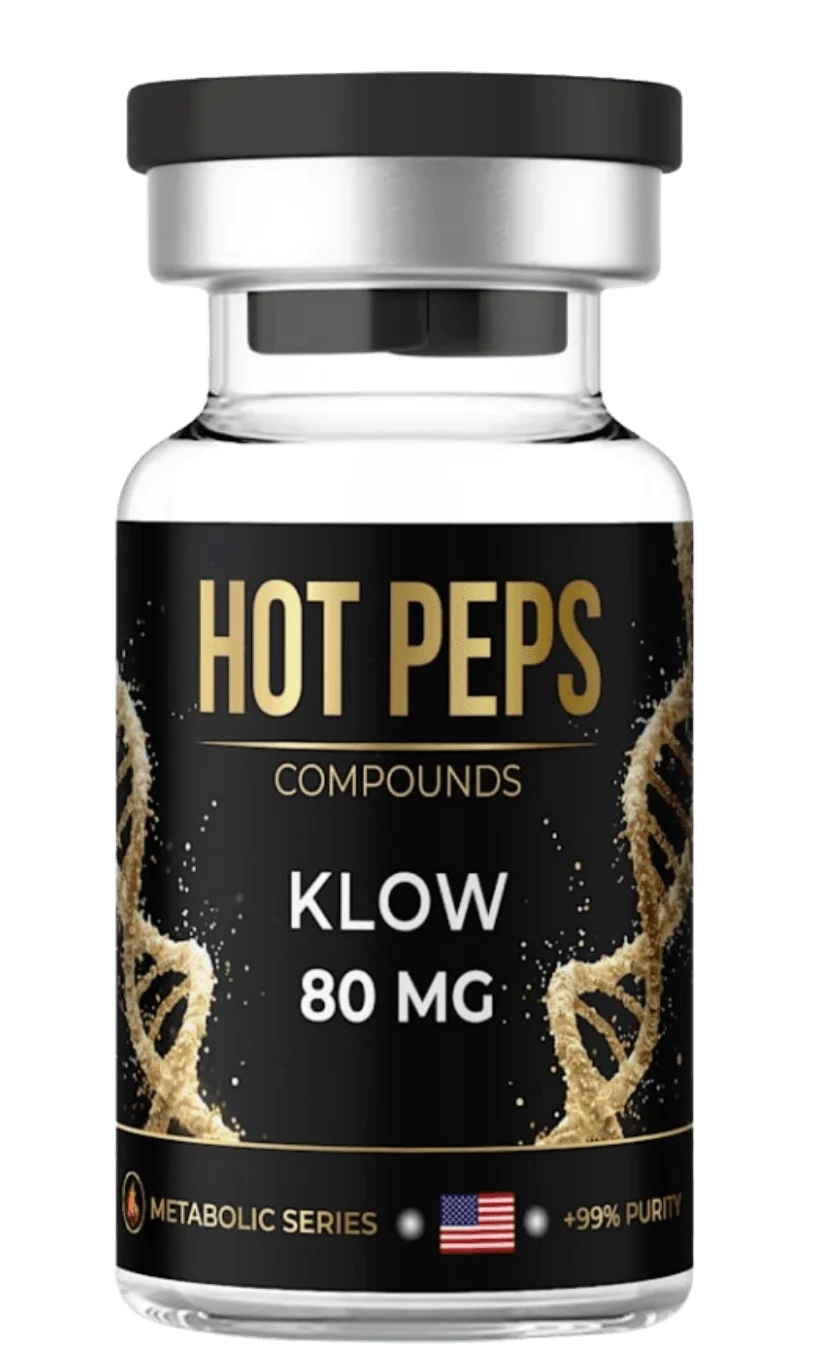
KLOW
80mg
$99.99
- SKU
- KL-80
- Purity
- ≥99%
- Form
- Lyophilized powder
- Storage
- Refrigerated after reconstitution
- Sequence
- Proprietary research blend (GHK-Cu, KPV, BPC-157, TB-500 / Thymosin β4 fragment)
This product is sold strictly for in vitro research, laboratory use, and scientific investigation only. Not for human or veterinary use. Not intended to diagnose, treat, cure, or prevent any disease.

Series
KLOW — 80 mg
- Proprietary blend (GHK-Cu / KPV / BPC-157 / TB-500)
- Tissue repair + inflammatory signaling research
- 4 component peptides, all peer-reviewed
KLOW is a research-grade blend of four peptides studied across tissue repair and inflammatory signaling pathways: GHK-Cu (a tripeptide-copper complex first isolated from human plasma), KPV (a C-terminal tripeptide derived from α-melanocyte stimulating hormone studied in inflammatory pathway research), BPC-157 (a synthetic pentadecapeptide derived from gastric juice protein), and TB-500 (a synthetic fragment of Thymosin β4 studied in actin-cytoskeleton and tissue migration signaling).
Published Research
- GHK-Cu component: A 2018 review in International Journal of Molecular Sciences (Pickart & Margolina) compiled findings across multiple tissue research models, documenting changes in collagen synthesis markers, blood vessel and nerve outgrowth indicators, and gene-expression measurements across more than 4,000 human genes.
- KPV (Lys-Pro-Val) component: Research published in Immunology Today (Lipton & Catania, 1997) documented KPV as the C-terminal active fragment of α-melanocyte stimulating hormone, with engagement studied in inflammatory signaling pathway research.
- BPC-157 component: A 2025 systematic review in the Orthopaedic Journal of Sports Medicine (Vasireddi et al.) analyzed 36 preclinical studies from 1993–2024, documenting changes in growth hormone receptor expression and pathways associated with cell growth and angiogenesis.
- TB-500 (Thymosin β4 fragment) component: Research published in Trends in Molecular Medicine (Goldstein et al., 2005) documented Thymosin β4 as an actin-sequestering protein examined in tissue repair signaling research.
Mechanism of Action
KLOW combines four peptides studied for distinct interactions with tissue repair pathway research: copper-mediated gene expression (GHK-Cu), inflammatory signaling engagement (KPV), nitric-oxide and growth-factor pathway interaction (BPC-157), and actin-cytoskeleton / cell migration signaling (TB-500).
Key Citations
- Pickart L, Margolina A. Regenerative and Protective Actions of the GHK-Cu Peptide. Int J Mol Sci. 2018;19(7):1987.PMID: PMC6073405
- Lipton JM, Catania A. Anti-inflammatory actions of the neuroimmunomodulator α-MSH. Immunol Today. 1997;18(3):140-145.PMID: 9078687
- Vasireddi N, et al. Emerging Use of BPC-157 in Orthopaedic Sports Medicine: A Systematic Review. Orthop J Sports Med. 2025.PMID: 40756949
- Goldstein AL, et al. Thymosin beta4: actin-sequestering protein moonlights to repair injured tissues. Trends Mol Med. 2005;11(9):421-429.PMID: 16111920
Related Articles
What Are Research Peptides? A Scientific Overview
An educational introduction to research peptides — covering amino acid chains, solid-phase synthesis, lyophilization, purity standards, and how synthetic peptides are used in laboratory investigations.
Understanding Peptide Purity and Third-Party Testing
A detailed look at what peptide purity means, how HPLC and mass spectrometry are used to verify research compounds, and why purity standards matter in laboratory investigations.
How Peptides Are Manufactured
A comprehensive guide to solid-phase peptide synthesis, HPLC purification, lyophilization, quality control protocols, purity testing, and certificate of analysis documentation for research-grade peptides.
Related Compounds — Tissue Signaling Series
KLOW
80mg
$99.99
- SKU
- KL-80
- Purity
- ≥99%
- Form
- Lyophilized powder
- Storage
- Refrigerated after reconstitution
- Sequence
- Proprietary research blend (GHK-Cu, KPV, BPC-157, TB-500 / Thymosin β4 fragment)
This product is sold strictly for in vitro research, laboratory use, and scientific investigation only. Not for human or veterinary use. Not intended to diagnose, treat, cure, or prevent any disease.